Search

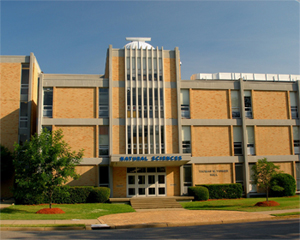
About the School of Science

School of Science Statistics
Official Name of School: School of Science
Full Name & Title of Dean: Dr. Calvin Lowe
Official Year Founded: 1996*
Number of Faculty: 130 (w/ PT 135)
Number of Undergraduate Students: 700
Number of Graduate Students: 170
Prior name for the School of Science: The School of Pure and Applied Sciences

Approximately 700 undergraduate and 170 undergraduate students are enrolled in the School of Science. The School has 130 faculty members, 45 of which are tenured, 25 hold the rank of full professors, 6 are named endowed university professor, 3 were awarded the Outstanding Teaching Award by the Common wealth of Virginia, two were named the  Virginia Outstanding Scientists, 16 are research professors, and almost 90% hold the terminal degree in their fields.

Students attend and present their research at scientific conferences where they meet and network with scientists and other students in like disciplines, as well as with recruiters from industry, government, scientific laboratories and graduate schools.  Students are encouraged to participate in summer internships or research programs. Students actively participate in our research programs and in the research centers:

The academic and research programs provide broad scientific research experiences, as well as provide education in the basic sciences and mathematics.

Active research programs in the School of Science are offered in all of our departments and external funding for the past year exceeded $24,000,000. Hampton University's close proximity to the Thomas Jefferson National Accelerator Facility and to NASA-Langley Research Center provides access to additional resources. Nationally and internationally recognized research is conducted by School of Science faculty members and researchers in fields including atmospheric and planetary sciences, medical physics, cancer imaging, and cancer research. The school excels in nuclear and particle physics and optical physics research, and is currently exploring the fields of material science, nanotechnology, genomics, alternative fuels and energy.  Research has already resulted in tangible applications such as the launching of weather satellites and the development of an imaging device for breast cancer.  Further, our research efforts have led to a number of patents in the areas of medical instrumentation, optical physics and holographic storage.

The School of Science is seeking to address issues that are critical locally as well as nationally, such as the shortage of African American scientists, engineers and health care professionals, the problems of health disparities affecting the African American community, and the achievement gap hindering African American children.  Also, new efforts examine issues that came to light during Hurricane Katrina such as emergency response, evacuation procedures, and hurricane path forecasting.

Because of the efforts of the School of Science in the areas of research and grant writing, we have been able to add exciting and often unique curricular offerings, such as Masters and PhD programs in Physics, Medical Physics, and Atmospheric and Planetary Sciences. The following statistics provide an example of the impact of Hampton University - while on the average only 3.5% of PhDs in science and engineering related areas are awarded to African Americans (according to a 2004 National Science Foundation survey), the American Institute of Physics Statistics reported that in 2001, HU’s Physics Department graduated more than 70% of the African-American PhDs nationally.